
Epoxy flooring is widely known for its exceptional durability. However, long-term performance relies heavily on both advanced material science and precise installation methods. Not all flooring products perform equally. A floor will only last if it is built correctly from the bottom up. Several critical factors impact the lifespan of your floor:
- Surface preparation
- Resin chemistry
- Curing conditions
- Installation technique
The Materials Behind High-Performance Epoxy Flooring
The foundation of any durable surface starts with precise epoxy resin and hardener chemistry. When mixed, these components create a rigid plastic material with incredible adhesion properties. This chemical bond provides superior chemical resistance, impact resistance, and moisture protection.
Every facility faces unique challenges, so different environments require different flooring formulations. A manufacturing plant might need extreme chemical resistance, while a food processing facility requires specific antimicrobial properties. Designing the right chemical makeup ensures the floor can withstand daily operational abuse. By utilizing top-tier epoxy flooring systems, facility managers can prevent premature wear and ensure the materials match the exact structural demands of the building.
Why Surface Preparation Is Critical
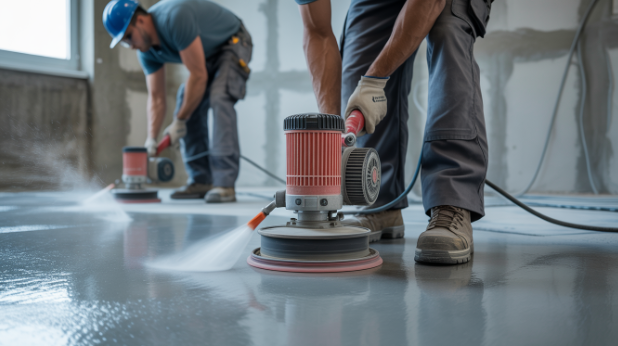
Even high-quality resins will fail without proper substrate preparation. An industrial epoxy flooring contractor knows that mechanical preparation is nonnegotiable. This process includes concrete grinding and shot blasting to create the necessary substrate profiling.
Proper surface profiling allows the epoxy to mechanically bond with the concrete pores. Installers must also perform rigorous moisture testing and execute professional concrete repair Richmond va before applying any coatings. Skipping crack repair or ignoring moisture levels inevitably leads to severe problems like delamination, surface bubbling, cracking, and total coating failure.
Installation Techniques That Affect Long-Term Durability
Proper material application is just as vital as surface preparation. Capable technicians monitor specific environmental conditions to ensure the resin cures perfectly. Temperature and humidity play a massive role in achieving optimal curing times.
Installers must also control coating thickness and carefully build layering systems to guarantee maximum traffic resistance. Applying the product too thin reduces impact resistance, while applying it incorrectly can trap air bubbles. When you invest in professional commercial flooring Richmond va, the installation crew utilizes proven techniques to maximize the lifespan of the floor and drastically reduce future maintenance requirements.
Why Different Facilities Require Different Flooring Systems
No two industrial spaces operate exactly alike. Flooring solutions must be completely customized to handle specific operational demands. Heavy equipment traffic in busy warehouses demands high compressive strength. Meanwhile, manufacturing plants and chemical processing areas require specialized coatings designed to withstand severe chemical exposure. Food and beverage facilities need seamless, sanitary surfaces that can endure frequent hot water washdowns. Tailoring the resin blend and topcoats to the exact environment prevents premature deterioration and keeps commercial facilities running safely.
Investing in Long-Term Floor Performance
Achieving a long-lasting epoxy floor depends on the perfect combination of high-quality materials and precise installation methods. Cutting corners on preparation or chemistry will only result in early failure. Investing in the correct flooring system upfront helps reduce long-term maintenance and repair costs, ensuring your facility operates smoothly for years.
Learn how Epoxy Systems delivers long-lasting epoxy flooring and concrete repair solutions tailored to industrial and commercial facilities.