
Installing epoxy flooring is one of the most effective ways to improve the durability, appearance, and long-term performance of a commercial, industrial, or specialty space. Whether you are upgrading a warehouse, showroom, kitchen, healthcare facility, production area, or public-facing interior, preparation plays a major role in the success of the finished floor.
A professional epoxy installation does not begin when the coating is applied. It begins with the condition of the space, the cleanliness of the surface, the planning of access, and the readiness of the concrete beneath it. The better the preparation, the better the outcome.
At Epoxy Systems, this shift is something they see firsthand, as more businesses move toward durable, seamless flooring systems designed to meet modern demands.
Why Proper Preparation Matters
Epoxy floors are known for their strength, clean appearance, and ability to withstand heavy use. However, even the best flooring system depends on proper preparation before installation.
If the surface is not ready, the floor may not bond correctly. That can lead to peeling, bubbling, uneven finishes, or premature wear. Preparing the space carefully helps ensure stronger adhesion, a smoother installation process, and better long-term performance.
Clear the Installation Area
The first step is removing everything from the space where the epoxy will be installed. This may include furniture, equipment, storage racks, vehicles, inventory, shelving, and loose materials.
In commercial or industrial facilities, this step should be planned in advance to avoid unnecessary downtime. If your business needs to continue operating during installation, consider temporary storage areas or phased scheduling so work can be completed efficiently.
A clear space allows the installation team to inspect the concrete, prepare the surface properly, and apply the flooring system without obstruction.
Inspect the Existing Floor
Before epoxy can be installed, the existing floor must be evaluated. Concrete surfaces often have hidden issues that need to be addressed before coating begins.
Common concerns include:
- Cracks
- Moisture problems
- Oil or grease contamination
- Uneven surfaces
- Old coatings or sealers
- Surface deterioration
These problems can affect the final result if ignored. Professional installers know how to identify and correct these issues before moving forward.
Clean and Remove Contaminants
Epoxy requires a clean surface to bond correctly. Dust, dirt, oils, chemicals, and residue can interfere with adhesion.
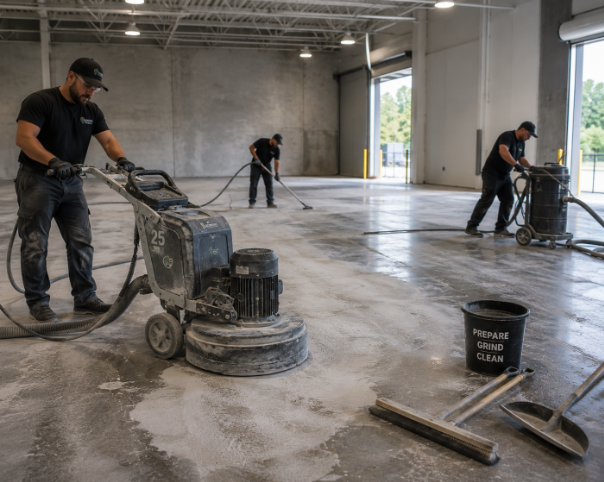
In many facilities, floors may have years of buildup from foot traffic, equipment, spills, or production activity. Cleaning alone may not be enough. Professional surface preparation often includes grinding, shot blasting, or other mechanical methods to create the proper profile for epoxy application.
One of the most significant advantages of epoxy flooring is its ease of maintenance. Once installed correctly, the seamless surface is easier to clean than many traditional flooring materials.
Plan Around Curing Time
Epoxy flooring needs time to cure before the surface can handle regular traffic, equipment, or heavy loads. Business owners should plan for temporary access restrictions and schedule installation during the least disruptive time possible.
Before installation begins, consider:
- When employees need access
- When equipment must be moved back
- Whether customers or visitors use the space
- How long the floor must cure before full use
Clear planning helps prevent delays and protects the quality of the finished floor.
Think About the Final Look and Function
Epoxy is not only practical. It can also enhance the appearance of a space. Depending on the setting, property owners may choose decorative finishes, safety markings, slip-resistant textures, or high-end design options.
That is where epoxy terrazzo stands out. It combines durability, flexibility in design, and long-term value, making it a preferred choice for architects, designers, and property owners alike.
Whether paired with decorative concrete finishes or terrazzo epoxy systems, it enhances both performance and visual appeal.
Communicate With Your Flooring Team
Every space has different requirements. A warehouse floor has different needs than a restaurant kitchen, medical facility, school, showroom, or manufacturing space.
Before installation, discuss your goals with your flooring contractor. Talk about traffic levels, cleaning needs, chemical exposure, safety concerns, design preferences, and project timeline. This helps ensure the finished system is built for the way your space is actually used.
Prepare for a Better Flooring Investment
A successful epoxy installation depends on more than the material itself. It requires planning, surface preparation, professional installation, and clear communication.
When your space is properly prepared, your new floor can deliver the durability, appearance, and performance you expect.
If you are planning an epoxy flooring project, Epoxy Systems is ready to help you prepare with confidence. Contact Epoxy Systems today online or call 804-885-2990 to discuss your project.