
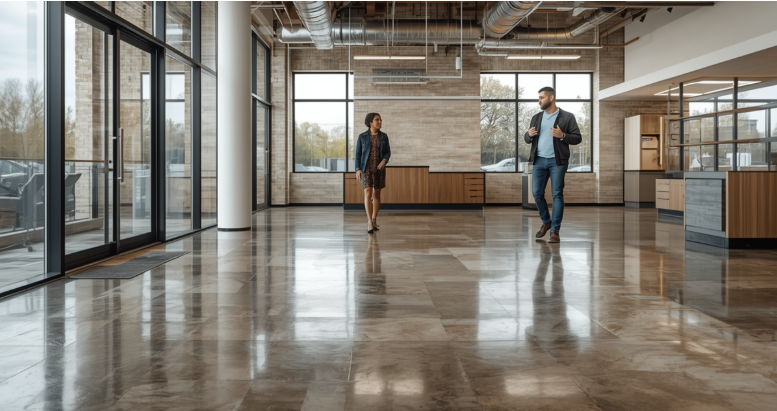
Commercial spaces are no longer judged on function alone. Offices, retail stores, restaurants, healthcare facilities, and industrial environments are expected to look good, perform well, and last for years with minimal disruption. Flooring plays a bigger role in this shift than many people realize. What was once an afterthought has become a design feature, a branding tool, and a long-term investment.
Decorative concrete has emerged as a smart solution that balances aesthetics with performance. From polished finishes to resin-based systems, it offers durability without sacrificing visual appeal. For businesses working with Epoxy Systems, decorative concrete is becoming the foundation for spaces that feel modern, professional, and built to last.
Why Decorative Concrete Is Gaining Ground
Decorative concrete has been around for decades, but recent advances in materials and application techniques have pushed it into the spotlight. According to industry reports from organizations like the American Concrete Institute, concrete remains one of the most widely used building materials in the world, and decorative finishes now represent a growing share of commercial flooring projects.
Several factors are driving this trend.
First, businesses want floors that can handle heavy use. Foot traffic, rolling equipment, cleaning chemicals, and temperature changes can wear down traditional flooring quickly. Decorative concrete systems are engineered to withstand these conditions without constant repairs.
Second, design expectations have changed. Commercial interiors often aim to reflect brand identity, create welcoming environments, or support productivity. Decorative concrete offers flexibility in color, texture, and finish that older concrete floors simply could not deliver.
Third, long-term value matters more than ever. Business owners are looking beyond upfront costs and focusing on lifecycle expenses. Concrete-based systems often last decades when properly installed and maintained, reducing replacement and downtime costs.
Understanding Decorative Concrete Options
Decorative concrete is not a single product. It is a broad category that includes several systems, each suited to different commercial needs. Understanding these options helps decision-makers choose the right solution for their space.
Polished Concrete
Polished concrete is created by mechanically grinding and polishing an existing slab, then sealing it for protection. The result is a smooth, reflective surface that works well in retail stores, offices, schools, and showrooms.
Key benefits include:
- High durability under heavy foot traffic
- Low maintenance compared to carpet or tile
- Improved light reflectivity, which can reduce lighting needs
- A clean, modern appearance
Polished concrete is often chosen for its simplicity and understated elegance. It also aligns with sustainability goals since it uses the existing slab rather than adding new materials.
Stained Concrete
Concrete staining adds color and depth to plain slabs. Acid-based stains react chemically with the concrete, creating natural variations and a marbled effect. Water-based stains offer more consistent color choices.
Stained concrete works well in restaurants, lobbies, and creative commercial spaces where visual impact matters. It allows designers to incorporate brand colors or subtle patterns without sacrificing durability.
Resinous and Epoxy Systems
Resin-based systems, including epoxy, polyurethane, and polyaspartic coatings, take decorative concrete to another level. These systems bond directly to the concrete surface, creating seamless floors that are both attractive and highly functional.
Businesses often turn to epoxy flooring systems when they need:
- Chemical and stain resistance
- Easy-to-clean surfaces for hygiene-sensitive areas
- Slip-resistant textures for safety
- Custom colors, flakes, or metallic finishes
Epoxy and resin floors are common in healthcare facilities, manufacturing plants, commercial kitchens, and automotive spaces. They also appear in offices and retail environments where a sleek, contemporary look is desired.
Beyond standard resins, businesses looking for the ultimate in architectural beauty and longevity are increasingly turning to epoxy terrazzo. This system allows for incredible design flexibility by incorporating marble, quartz, or glass aggregates into a high-performance resin base. Because it is poured in place and ground to a brilliant luster, it provides a seamless finish that is virtually indestructible. For those managing high-profile properties, selecting the right partner for commercial flooring in Richmond, VA, is vital to ensure these complex systems are installed to last a lifetime. Whether it is a prestigious corporate lobby or a bustling retail center, these high-end finishes prove that your facility’s foundation can be a breathtaking centerpiece while maintaining industrial-grade strength.
Where Design and Durability Intersect
One of the strongest arguments for decorative concrete is its ability to merge form and function. In the past, businesses often had to choose between a floor that looked good and one that could handle daily wear. Decorative concrete eliminates that compromise.
Visual Consistency Across Large Spaces
Commercial buildings often have large, open floor plans. Decorative concrete creates a continuous surface without grout lines or seams that can break up the design. This consistency makes spaces feel larger, cleaner, and more cohesive.
Performance in High-Traffic Areas
According to data from facility management studies, flooring damage is one of the most common maintenance issues in commercial buildings. Decorative concrete systems are designed to handle:
- Constant foot traffic
- Carts and forklifts
- Abrasion from dirt and debris
- Regular cleaning routines
This durability is a major reason many property managers choose resinous systems installed by experienced resin floor contractors who understand how to prepare and protect the underlying slab.
Customization Without Complexity
Decorative concrete allows for creative expression without adding fragile elements. Logos can be embedded, colors can be layered, and finishes can range from matte to high-gloss. These design choices do not compromise structural integrity when installed correctly.
Decorative Concrete in Different Commercial Settings
The versatility of decorative concrete makes it suitable for a wide range of commercial environments.
Retail and Hospitality
In retail stores and restaurants, flooring sets the tone. Decorative concrete supports branding while standing up to spills, foot traffic, and frequent cleaning. Stained or polished concrete creates a welcoming atmosphere without the upkeep demands of wood or tile.
Offices and Corporate Spaces
Modern offices favor open layouts and natural materials. Decorative concrete complements this trend by offering neutral tones, subtle textures, and a professional look. It also supports ergonomic and acoustic solutions when paired with area rugs or furniture.
Healthcare and Education
Cleanliness and safety are priorities in healthcare and educational facilities. Seamless concrete and resin floors reduce places where dirt and bacteria can hide. Slip-resistant finishes improve safety for patients, students, and staff.
Industrial and Automotive Facilities
In industrial settings, durability is non-negotiable. Epoxy and resin systems protect concrete from chemicals, impact, and moisture. Facilities that rely on industrial epoxy installers benefit from floors that support operations while maintaining a professional appearance.
The Role of Proper Installation
Decorative concrete is only as good as its installation. Surface preparation, moisture testing, and material selection all influence performance and lifespan. Industry standards emphasize the importance of trained professionals who understand both concrete behavior and coating chemistry.
Improper installation can lead to issues such as peeling, cracking, or discoloration. Working with experienced epoxy flooring experts reduces these risks and ensures the floor performs as intended for years.
Epoxy Systems focuses on proven methods and materials that align with manufacturer guidelines and industry best practices. This approach helps businesses avoid costly repairs and downtime.
Maintenance and Long-Term Care
One reason decorative concrete is so popular is its ease of maintenance. Most systems require simple cleaning routines rather than specialized treatments.
Typical maintenance includes:
- Regular sweeping or dust mopping
- Occasional damp mopping with neutral cleaners
- Periodic resealing or topcoat renewal, depending on use
Studies from facility management associations show that low-maintenance flooring can reduce operational costs over time. Decorative concrete supports this goal by minimizing labor and material expenses.
Sustainability and Environmental Considerations
Sustainability is becoming a priority in commercial construction. Decorative concrete contributes to greener building practices in several ways.
Using existing concrete slabs reduces the need for additional materials. Polished concrete eliminates the need for adhesives, carpets, or tiles that may contain volatile organic compounds. Many modern resin systems are formulated with low VOC content, supporting healthier indoor environments.
Improved light reflectivity can also lower energy use by reducing reliance on artificial lighting. These factors make decorative concrete an attractive option for businesses pursuing environmental certifications or long-term efficiency goals.
Looking Ahead: The Future of Decorative Concrete
The decorative concrete market continues to evolve. Advances in materials science are leading to stronger coatings, faster cure times, and even greater design flexibility. Digital color matching and improved surface preparation tools are raising quality standards across the industry.
As commercial spaces adapt to new ways of working and serving customers, flooring will remain a key element of both design and performance. Decorative concrete is well positioned to meet these changing demands.
Businesses that invest in quality systems today benefit from floors that age gracefully rather than becoming liabilities. With the right planning and professional installation, decorative concrete becomes part of a building’s long-term success.
For commercial property owners, facility managers, and designers exploring durable flooring solutions, decorative concrete offers a clear path forward. It combines visual appeal, structural strength, and practical maintenance in a way few materials can match.
If you are considering upgrading or installing commercial flooring and want guidance from experienced professionals, Epoxy Systems is ready to help. Visit https://epoxysystems.net/ to learn more about decorative concrete options and how the right system can support your space for years to come.